My rating: 3.5 out of 5 stars
Minor story spoilers.
Whalefall presents a frightening survival situation while exploring something many people understand: the difficulty of coming to terms with a painful relationship. I liked the movie, although at times the story moved too slowly. Its unusual premise and emotional themes make it worth considering, even when the pacing holds it back.
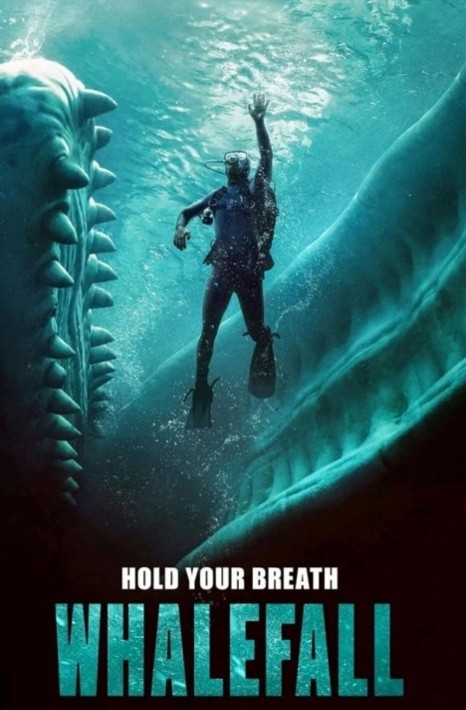
Directed by Brian Duffield and adapted from Daniel Kraus’s novel, the film stars Austin Abrams as Jay Gardiner and Josh Brolin as his father, Mitt. Jay dives off California’s coast to search for his deceased father’s remains.
During the dive, a massive sperm whale swallows him, leaving him trapped with approximately one hour of oxygen. Lessons he learned from his father become crucial to his struggle to escape. (20thcenturystudios.com)
A struggle with more than the ocean
The film moves between Jay’s immediate danger and memories of his troubled relationship with his father. Those memories reveal a history of harsh treatment and emotional wounds. They also complicate Jay’s struggle: knowledge inherited from the person who hurt him may help him survive. (rogerebert.com) That tension gives Whalefall its most meaningful question: How do we acknowledge what someone taught us while remaining honest about the harm they caused?
The flashbacks help explain the relationship, but the movement between past and present sometimes slows the film’s momentum. For me, that made portions feel longer than they needed to be. Still, the story offers worthwhile material for reflection on grief, perseverance, parenting, and healing.
Life lessons and Christian reflections
The following are biblical connections viewers can draw from the story, rather than claims that the film teaches Christian doctrine.
Unresolved hurt can shape how we see ourselves long after a relationship changes or ends. Moving forward begins with acknowledging that pain rather than pretending it never mattered. Psalm 34:18 reminds Christians that God draws near to the brokenhearted. Faith gives us a place to bring grief, anger, and questions honestly. Seeking support can be part of that healing.
A difficult parent may leave both useful lessons and painful memories. Recognizing one does not erase the other. Ephesians 4:31-32 calls believers toward kindness and forgiveness. That call can coexist with truthful acknowledgment of wrongdoing and appropriate boundaries. Understanding someone’s struggles does not excuse their cruelty.
Teaching endurance and responsibility matters. So do tenderness, encouragement, and respect. Children need to know they are loved while they are learning.
Ephesians 6:4 addresses fathers directly, warning against provoking children to anger while calling for godly instruction. Whalefall invites parents to ask: Will my child remember my guidance as something that strengthened them—or as something that made them feel inadequate?
Jay’s predicament invites reflection on how fear can overwhelm us when we look at everything that might go wrong. Sometimes progress begins with the next decision we can make. For Christians, perseverance includes prayer, wise action, and accepting help. Second Corinthians 4:8-9 describes hardship without surrendering hope. Faith does not promise an easy escape from every crisis, but it sustains us within uncertainty.
A person trapped inside a great sea creature naturally brings Jonah to mind. However, Jay’s circumstances should not automatically be interpreted as divine punishment or as a direct retelling of Jonah.
The useful connection is the experience of reaching the limits of self-reliance. Jonah 2 portrays prayer from a place of helplessness. Christians can take encouragement that even when circumstances feel beyond our control, we can still turn toward God.
Whalefall earns 3.5 out of 5 stars from me. Its pacing occasionally weakens the urgency, but its exploration of family wounds and the determination to keep living gives its survival story emotional weight.
A question to carry away: What pain from my past still needs attention, and what step toward healing can I take today?
Be the first to know about our latest updates, tips and special offers.
Copyright © 2022 All Rights Reserved
Website designed by Red Robin Designers.