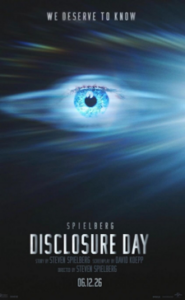
“Disclosure Day” (2026) is a tense, thoughtful Spielberg sci‑fi thriller that uses aliens and government secrecy to wrestle with purpose, faith, and whether humanity is ready to face uncomfortable truth.
It gives rich material for a Bible study on truth, calling, and what happens when light exposes what has been hidden.
Brief movie summary
Set against rising global tensions and the threat of World War III, cybersecurity expert Daniel Kellner steals classified Wardex files proving decades of secret extraterrestrial contact, intending to leak them to the world.
At the same time, Kansas City meteorologist Margaret Fairchild begins experiencing bizarre phenomena—speaking an alien language on live TV and sensing strangers’ inner lives -drawing her into a mysterious connection with Daniel.
Daniel and Margaret, along with Daniel’s girlfriend Jane and former Wardex insider Hugo, race to reveal the truth while being hunted by Noah Scanlon and the Wardex organization, who believe society will collapse if the secret comes out. The story builds toward “Disclosure Day” itself, when the world may finally learn it is not alone in the universe – and must decide what that knowledge means for faith, identity, and the future.
Discovering purpose and destiny
Each main character begins the film somewhat fragmented and unsure of their deeper purpose. Daniel is a gifted but conflicted technician whose conscience pushes him beyond a safe career into whistleblowing, forcing him to confront whether his life is about comfort or costly integrity.
Margaret feels “rootless” in her life as a TV weather personality until her strange experiences force her to decide whether she will treat them as an embarrassment or a calling. Her new abilities become less a “curse” and more a vocation when she chooses to use them to seek truth and serve others, echoing the biblical pattern of God using unexpected people (like Moses, Jeremiah, Mary) and unusual experiences to launch them into their true purpose.
In a Bible study, you could connect their journeys to passages like:
Both Daniel and Margaret discover that destiny is not a private dream but a responsibility to steward what God (or, in the film’s terms, “the universe”) has placed in their hands for the sake of others.
Is it better to know or stay ignorant?
The central moral question of the film is whether the world is better off knowing the truth about extraterrestrial life – or remaining in ignorance for the sake of stability. Wardex, led by Noah Scanlon, insists that the masses cannot handle the truth and that disclosure will shatter social order, faith, and global security.
On the other side, Daniel, Margaret, Hugo, and most of the protagonists believe that people have a right to know reality, even if that knowledge is disruptive and painful. The film ultimately leans toward the idea that knowing and wrestling with truth—even truth that unsettles us—is better than living under a comforting lie, which resonates strongly with a Christian view of light exposing darkness (John 3, Ephesians 5).
For Bible study, you can compare:
Once we know the truth, then what?
The film doesn’t stop at the revelation of alien life; it asks what that knowledge does to people’s sense of self, faith, and responsibility. Some characters respond with fear and attempts to tighten control (Noah and Wardex), others with existential crisis (Jane’s wrestling over whether disclosure will shatter belief in God), and others with courageous action (Daniel, Margaret, Hugo).
In Christian terms, this parallels what happens when someone encounters the gospel or a hard biblical truth:
“Disclosure Day” illustrates that after truth comes:
For Bible study, you might ask:
Complex relationships between main characters
Daniel and Margaret
Daniel and Margaret don’t begin the film together, but their lives are mysteriously intertwined through Margaret’s visions and shared alien “language.” As they finally meet and cooperate, their relationship becomes a blend of reluctant partnership, mutual dependence, and spiritual curiosity, as each is forced to trust the other’s strengths – Daniel’s data and Margaret’s strange, almost prophetic experiences.
Their bond models how different gifts and perspectives (logic and intuition, tech and “spiritual” experience) can work together in the pursuit of truth, echoing the biblical idea of one body with many members (1 Corinthians 12).
Daniel and Jane
Daniel and Jane’s relationship is perhaps the most emotionally complicated.
Daniel’s secretive work with Wardex and his decision to steal evidence puts Jane in physical danger – she is kidnapped and used as leverage – raising questions about trust, consent, and whether his crusade for truth justifies endangering someone he loves.
Jane, a former novice nun who left the convent because of unanswered questions about God, represents a sensitive conscience caught between skepticism and longing. She worries that revealing aliens could destroy many people’s faith, yet she also recognizes that some vision of God remains crucial for moral order, so she challenges Daniel’s “truth at any cost” mentality.
Their dialogue can echo Bible study discussions around speaking truth in love (Ephesians 4) and counting the cost of following conscience.
Margaret and Jackson, Daniel and Hugo, versus Noah
Margaret’s relationship with her partner Jackson brings in a grounded, sometimes skeptical but ultimately supportive presence that reflects how loved ones react when we step into risky callings they do not fully understand.
Daniel’s connection with Hugo, a fatherly ex‑Wardex employee who runs an underground network, contrasts sharply with Noah’s cold utilitarianism, presenting two “older mentor” figures pulling him toward very different visions of what truth is for.
In a Bible setting, these relationships can lead into discussions about:
Life lessons for a Bible study class
Here are some concrete themes and questions you could build into a Bible study using “Disclosure Day”:
As Yourself: “If tomorrow were a ‘disclosure day’ in your own life, and everything hidden was brought into the light before God and others, what would change, and how would you want to respond?”
Be the first to know about our latest updates, tips and special offers.
Copyright © 2022 All Rights Reserved
Website designed by Red Robin Designers.